Data Centres

What is a data centre?

A data centre is a facility that houses large numbers of computers and related equipment used to store, process and transmit digital information. Data centres support many of the technologies people use every day, including websites, cloud-based services, online banking, streaming services, artificial intelligence (AI) applications and digital communications. 

As demand for digital services continues to grow, new types of data centres are being developed to support technologies such as artificial intelligence and advanced computing.  

The Government of Alberta’s data centres webpage has more information about AI data centre infrastructure, their impacts, and their benefits. 

The Government of Alberta released their Artificial Intelligence Data Centres Strategy in 2024. It outlines the province’s direction to attract AI investment, manage growing technology demand while balancing energy needs, affordability and environmental concerns. 

The County recognizes the significant community interest in data centres and the development permit recently issued in the Emerson Trail Area. We understand that residents have questions and concerns about the development and the process that led to the development permit being issued. 

What are the potential benefits of data centres?

As demand for digital services and technologies grows, new types of data centres are being developed. Data centres vary in size, design and how they operate. This means their infrastructure and impacts also vary. 

Some of the benefits may include:  

  • Investment in the local and regional economy 

  • Employment opportunities during construction and operation 

  • Opportunities for local businesses, contractors and service providers 

  • Growth in the municipal assessment base that can help support services and infrastructure 

  • Infrastructure investments associated with development 

The extent of these benefits depends on the size, design and operation of each facility. 

Our Approach

The County is preparing for possible data centre development in a way that supports responsible economic growth while considering the impacts and concerns of the community.  

Who approves data centres?

There is no single authority responsible for approving a data centre. Depending on the nature of the project, approvals may be required from multiple organizations or regulators.  

The County’s role is limited to matters under municipal jurisdiction, such as land use, zoning and development approvals. A development permit confirms the proposed development complies with the Land use Bylaw (LUB) and other applicable municipal requirements.  

Depending on the nature of the project and operation of the facility, additional approvals may be required from other agencies before construction or operation can proceed.  

Additional approvals may be required for: 

  • Electricity generation and power infrastructure 

  • Grid connection and transmission capacity 

  • Natural gas infrastructure 

  • Water use and water licensing 

  • Environmental assessments and environmental protection requirements 

  • Air emissions and noise management 

  • Indigenous consultation requirements 

  • Building, safety and technical code compliance 

Approval requirements vary depending on the specific details of the project.  

The Government of Canada is responsible for federal legislation and regulations in areas such as privacy and protection of personal information.  

Get Involved

These are the different ways you can learn about data centre development and provide feedback on proposed projects and policies. 

Proposed LUB Amendment

Learn about the proposed LUB amendment and share your feedback.

The proposed LUB amendment and up-to-date data centre information is available on the County’s Engage page. Follow our current land use bylaw amendments and learn about opportunities to provide comments.

Provincial Information

Learn about provincial regulations for data centres and opportunities to participate.

Data centre projects require provincial approvals in addition to County approvals. Provincial processes are separate from the County's and may include their own opportunities for public participation.

Visit AI Data Centres in Alberta for information about the province’s efforts, requirements, regulations, and announcements. 

Recent County Updates

October 5, 2026 
Council gave first reading to proposed Land Use Bylaw amendments that would establish a new Data Centre Campus (DAT) District and remove Data Processing Establishment as a use from all other land use districts. 


Regulations and Approvals

There is no single approval body for a data centre. Depending on the project, approvals may be required from the County, provincial regulators and other organizations. The County is responsible for municipal land use, zoning, and development approvals.  


How Land Uses Work 

The County’s Land Use Bylaw sets out how land can be used and developed. Each property has a land use zone, also known as a land use district. This outlines the uses that are allowed on that piece of land.  

When a property is rezoned, also known as redesignated, the zoning is changed and the uses that are allowed on that land change. Because each zone allows a number of uses, the final use of a property may not be known when it is rezoned.  

The process of rezoning is also called ‘redesignation’.  

Within each zone, uses are identified as permitted or discretionary.  


A permitted use is a use that is allowed within a property's land use district. If an application meets the requirements of the Land Use Bylaw, the development permit must be approved. 

Under the County's current Land Use Bylaw, data processing establishment is one of many permitted uses for land zoned industrial; this is what the proposed LUB amendment is changing. 

Read more on the County's Engage Page.

A discretionary use is a use that may be allowed within a land use district. The Development Authority has more discretion over the approval of the development permit and what conditions should be applied, beyond the standards set out in the Land Use Bylaw.

Rezoning, also called redesignation, changes the land use district for a property and the uses that may be allowed on that land. 

Because rezoning changes the Land Use Bylaw, it requires a public hearing before Council makes a decision. The County's scheduled public hearings page confirms that public hearings are held for proposed Land Use Bylaw amendments and that residents can speak at a hearing or provide written comments. 

No. Rezoning changes how a property can be used. It does not approve a development permit. 

A development permit is a separate approval that considers the specific development being proposed. 

Proposed Land Use Bylaw Changes

On October 5, 2026, Council gave first reading to proposed changes to how data centres are regulated under the Land Use Bylaw. 

The proposed changes would: 

  • Create a new Data Centre Campus (DAT) District specifically for data centre development. 

  • Remove Data Processing Establishment as a use from all other land use districts. 

  • Require proposed data centres to apply to rezone land to the new DAT District before a development permit could be considered. 

Proposed DAT District FAQs

A dedicated Data Centre Campus (DAT) District will provide a clearer and more transparent planning framework for proposed data centre developments. 

If approved, this would be the zoning designation for data centre developments and future proposals would be required to apply to rezone land to the DAT District. Creating a DAT District does not automatically approve any data centres. When a rezoning application is made for the DAT District, it would clearly identify the proposed end use as a data centre.

The proposed changes are not yet approved.
First reading allows the proposed bylaw to move forward for public feedback and a public hearing. Council will consider the feedback received before deciding whether to give the bylaw second and third readings.

Applications to rezone land to the proposed DAT District could be submitted anywhere in the County. 

The Municipal Development Plan identifies areas intended for industrial development and those areas would generally align most closely with County planning policies.

Council may also consider applications in other locations through the required planning and approval processes. 

Depending on the location and scope, additional planning processes may be required before rezoning can be considered. 


Roles and Responsibilities

Developing a data centre involves multiple parties, each with different roles, responsibilities and areas of authority. While the applicant is responsible for proposing and developing the project, municipal, provincial and federal organizations may have regulatory, approval or oversight roles. 

  • Land use, zoning and development approvals 

  • Compliance with local bylaws and standards 

  • Monitors construction and development to ensure compliance  

  • Electricity generation and power infrastructure 

  • Grid connection and transmission capacity 

  • Natural gas infrastructure 

  • Water use and water licensing 

  • Environmental assessments and environmental protection requirements 

  • Air emissions and noise management 

  • Indigenous consultation requirements 

  • Building, safety and technical code compliance 

  • Regulatory bodies: 

  • Federal environmental legislation, oversight and regulation 

  • Privacy legislation and protection of personal information  

  • Telecommunications regulations (fibre lines) 

  • National cybersecurity and national defence 

  • Project planning and development  

  • Applications and required technical studies  

  • Obtaining required permits and approvals  

  • Funding required project infrastructure and improvements  

  • Meeting approval conditions and regulatory requirements  

  • Sharing project plans and information with residents 

Proposed Data Processing Establishment in Emerson Trail

The County issued a development permit application for three pieces of land in the Emerson Trail Area Structure Plan. The ASP was developed through technical studies and public consultation and identifies the area for industrial development. The three properties were later rezoned to an industrial district through a separate process that also included public consultation.  

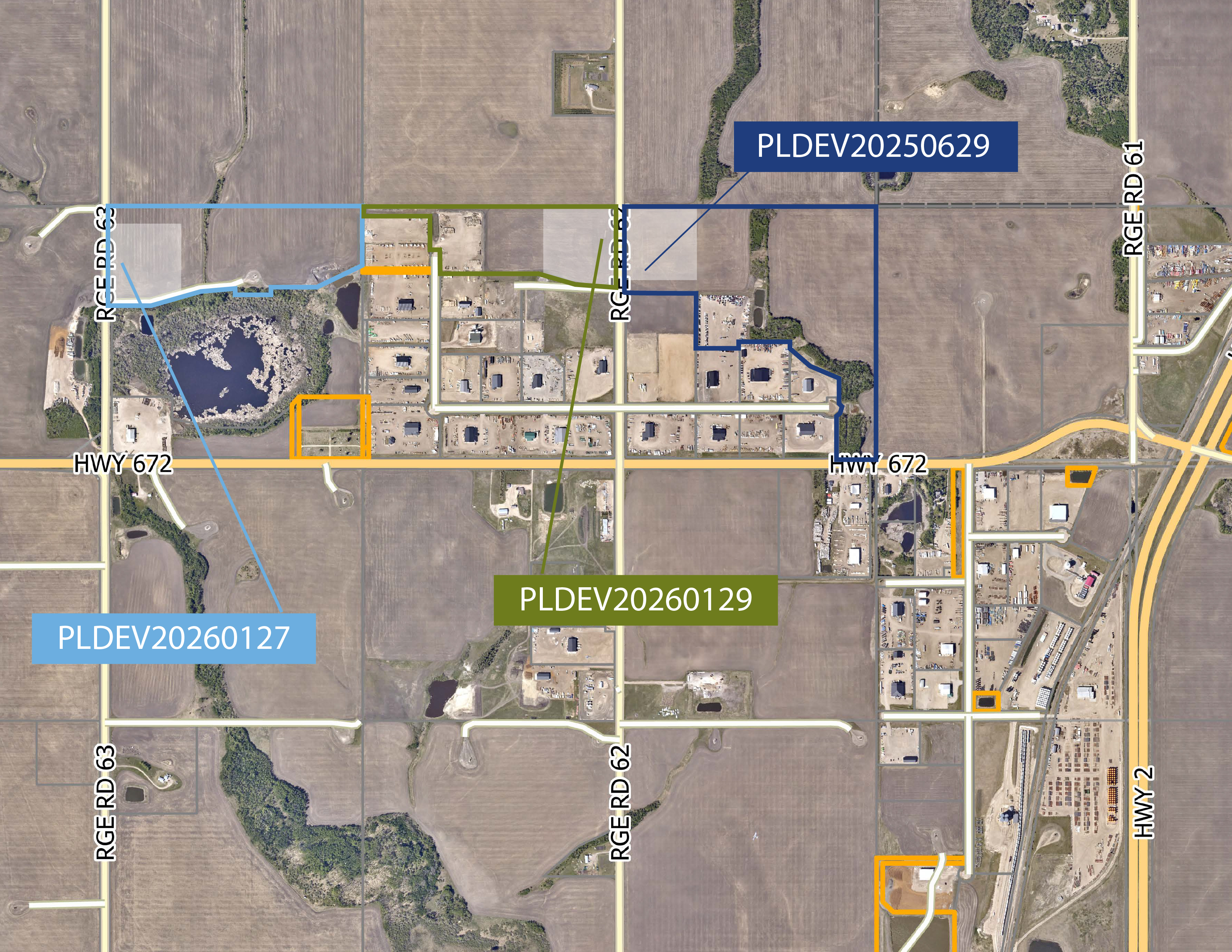
This includes development permit number PLDEV20250629, issued on September 4, 2026, located at 732041 Range Road 62, north of Highway 672 in the Emerson Trail Industrial Area for a data processing establishment, also known as a data centre. 

Proposed Data Processing Establishment in Emerson Trail

Why was this approved?

Under the County’s existing Land Use Bylaw, adopted in 2003, data processing establishments are one of many permitted uses in areas zoned industrial. This includes the Emerson Trail Area. The development permit was approved and not circulated to adjacent landowners as it is a permitted use.  

2003 - The County adopted the Land Use Bylaw
Data processing establishments are one of the many  permitted uses in areas zoned industrial.  

2009 – The Emerson Trail Area Structure Plan (ASP) adopted
The Area Structure Plan sets the plan for the area to be developed as an industrial park. 

December 2024 - The Province of Alberta releases its AI Data Centre Strategy to guide data centres development in Alberta.

2025 – The County receives applications for lands within the Emerson Trail Area Structure plan to be rezoned from agricultural to industrial, in alignment with the ASP. 

May 2026 – The first data processing establishment development permit approved
PLDEV20260129 was approved for a data processing establishment on land already zoned Rural Medium Industrial (RM-2). 

May 2026 – Second development permit for a spec building approved
PLDEV20260127 was approved for the construction of five spec buildings and related infrastructure. The permit does not approve a specific use for the buildings.

June 2026 – Land rezoned
The land associated with PLDEV20260127 was rezoned from Agricultural (AG) to Rural Medium Industrial (RM-2).  

September 2026 – Third development permit issued
PLDEV20250629 was issued on September 4, 2026, for the land located at 732041 Range Road 62, north of Highway 672. 

September 23, 2026 – County issues public statement on approved data centre development permit. The County issued a public statement addressing the development permit issued on September 4 and published additional information including the appeals process on www.countygp.ab.ca/datacentres. 

September 25, 2026 – LPRT Appeal Submission Deadline
The time period to submit appeals to the Land Property Rights Tribunal (LPRT) ended on September 25. The County will share more information about next steps once an update from the Land and Property Rights Tribunal is received. 

September 28, 2026 – Council directed Administration to draft an amendment to the LUB
After a closed session special Council meeting on September 28, 2026, Council directed Administration to bring a Land Use Bylaw (LUB) amendment addressing data centres to the October 5 Council Meeting for first reading.  

October 5, 2026 – Data Centre Campus (DAT) District Bylaw Presented to Council
Council gave first reading to Bylaw #2680-26-046 Land Use Bylaw Amendment to Create the Data Centre Campus (DAT) District.  

Present - November 2026 – Next Steps
Residents are encouraged to learn more about the proposed amendments and provide feedback through the County’s Engage page.

A public hearing will be held on December 2, 2026, at 1:00 p.m. Visit Proposed Data Centre Land Use Bylaw Changes | Engage the County of Grande Prairie for more information and updates. 

Council will review the process that led to this development permit as well as the current Land Use Bylaw as it relates to data centres. Public input will play an important role in strengthening future planning and development processes. 

In the interim, any new development permit applications for data processing establishments or data centres will be referred to the Municipal Planning Commission (MPC) for review and circulated to surrounding residents for input. 

No. The development permit includes several approval conditions that must be met before any construction can begin. In addition, any required provincial, federal, and regulatory reviews, permits and approvals must be completed before the project can proceed.  

The Land and Property Rights Tribunal (LPRT) appeal period for development permit PLDEV20250629 ended on September 25, 2026.  

The County will share more information once an update from the LPRT is received. 

The Alberta Utilities Commission (AUC) will also consider appeals when reviewing and deciding on applications for any utility infrastructure required to support a data centre.  

The following Development Permits were issued for lands within the Emerson Trail Area:

The following map shows the land for each of the three development permits issued: 

We understand that residents have questions and concerns about the development and would like to see site plans and building renderings 

If you are looking for specific application records or supporting documents, requests can be made under the Access to Information Act through the County’s Information Request process. The information request form is available here.  

Where is the proposed data centre located? 

The proposed development is located at 732041 Range Road 62, north of Highway 672, within the Emerson Trail Area Structure Plan.


What has been approved? 

Development permit PLDEV20250629 was approved for a data processing establishment, five accessory buildings, 15 generators and 15 make-up air/cooling units.   

The permit also includes variances for the number of main buildings and setbacks between buildings.


Was the public notified before the development permit was approved? 

No. Under the County’s current Land Use Bylaw, a data processing establishment is a permitted use for the property’s industrial zoning, so public notification was not required for the development permit. 

Public consultation occurred during the separate, earlier rezoning process, which was approved by Council. 


Can the development permit be appealed? 

No. The appeal period for Development Permit PLDEV20250629 closed on September 25, 2026. The County will share more information once an update from the Land and Property Rights Tribunal is received.  


Why wasn't Council involved in the development permit approval process for the project? 

Council was involved in the rezoning process. Once the property was rezoned to industrial, a data processing establishment was a permitted use. When the development permit was submitted months later, Administration reviewed and approved it because it was a permitted use.


Can Council overturn the approval? 

No. Council cannot overturn an approved development permit. Council can change how future data centre applications are considered. On October 5, 2026, Council gave first reading to proposed Land Use Bylaw amendments that would create a new Data Centre Campus (DAT) District and remove Data Processing Establishment as a use from all other land use districts. 


Why was the application approved by Administration? 

Under the County’s current Land Use Bylaw, adopted in 2003, a data processing establishment is one of many permitted uses in areas zoned industrial. The property had already been rezoned to industrial by Council. Administration reviewed the application and, because it was a permitted use for that zoning, approved it. 

The proposed new Data Centre Campus (DAT) District would change zoning requirements for all data centres going forward. 


What approvals are still required before construction or operation can begin? 

Additional approvals are required for transportation, power generation and transmission, grid connections, water use and environmental requirements. The development permit does not replace these approvals or guarantee the facility will be constructed or become operational.  


Will the facility generate its own power? 

The development permit includes 15 generators but does not approve how power will ultimately be supplied to the facility. 

Power generation and grid connections are subject to separate provincial regulatory processes. 


How much electricity is expected to be required? 

The development permit does not establish or approve how much electricity the facility will use. Power requirements will depend on the final project design and separate provincial regulatory processes. 


How much water will the facility use? 

The development permit does not establish or approve how much water the facility will use. Water requirements will depend on the final design and cooling system, with any required water licensing subject to provincial regulation. 


What is the County doing now?  

On October 5, 2026, Council gave first reading to proposed Land Use Bylaw amendments that would create a new Data Centre Campus (DAT) District and removed Data Processing Establishment as a use from all other land use districts. Now, we will be asking for input on the bylaw. Visit the County's Engage page to submit comments or register to speak at the public hearing on December 2, 2026, at 1:00 p.m.