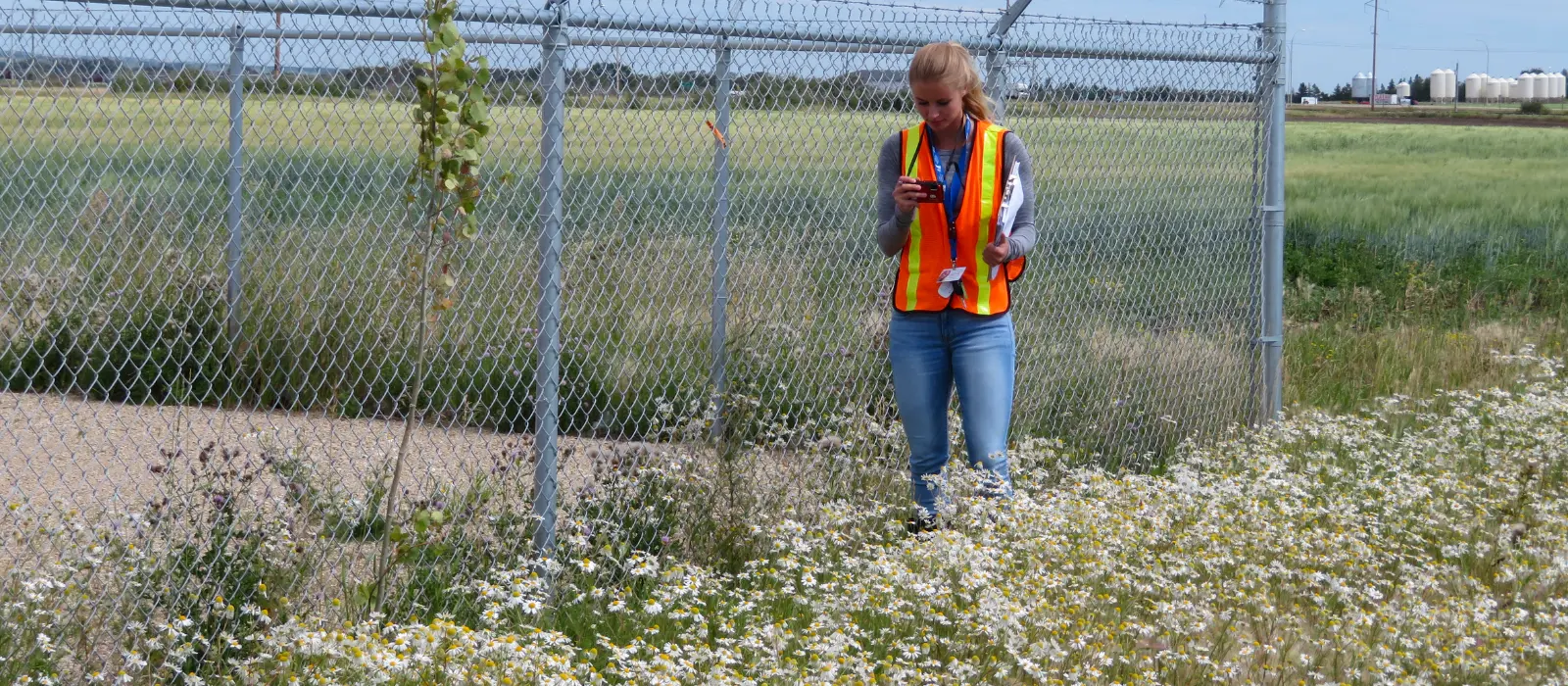
An Inspector who is appointed by a local authority or by the Minister can enter land without permission of the landowner. An inspector can enter on any land at a reasonable hour to inspect for violations.
Weed Inspection
The Alberta Weed Control Act and Regulation is the guiding legislation for weed control in Alberta. Under this legislation, weeds declared as noxious or prohibited noxious must be controlled or eradicated by the landowner.
Contact the Weed Inspection Officer if you have any questions or would like further information.
Frequently Asked Questions:
Can a Weed Inspector Enter My Land Without Permission?
What is the Difference Between a Weed Request and a Weed Notice?
Weed Request
A Weed Request is used to notify a landowner that noxious and/or prohibited noxious weeds have been identified on their property. Notification may occur in person, by mail, or via a door hanger.
Following this notification, landowners are expected to initiate a weed management plan to ensure the weeds are addressed in a timely and appropriate manner. This plan must be communicated to the County Weed Control Inspector who sent the request.
A Weed Request is intended as a first step and focuses on education and awareness of legislated weeds within the County, including management strategies and support for control/destruction.
Weed Notice
A Weed Notice is a legal document issued under the Alberta Weed Control Act. It requires the control or eradication of identified weeds within a specified timeframe. In the County of Grande Prairie, a Weed Notice is issued if:
- Following notification (a Weed Request), a weed management plan has not been developed and there is no indication that control and/or destruction of the weed(s) will occur (e.g. lack of communication and/or follow through from the landowner), or
- A prohibited noxious weed is identified on private land
If a landowner fails to comply with a Weed Notice and enforcement is required, the County may complete the work and bill the associated costs to the landowner.
What is Required in a Weed Management Plan?
If you've been asked to provide a weed management plan for weeds identified on your property, you can consider the following methods:
- Physical control (mowing, hand-picking)
- Chemical control (herbicide application)
- Cultural control (crop rotation, selecting competitive varieties, fertilization)
- Biological control (introduction of natural enemies)
For best long-term weed control, it is recommended to use an Integrated Pest Management (IPM) approach, which involves employing one or more of the above methods.
Yes, a violator has the right to appeal within the time specified on the Weed Notice or within 10 days, whichever is sooner.
What is the Difference Between a Noxious Weed and a Prohibited Noxious Weed?
Alberta's Weed Control Act defines weeds as either "noxious" or "prohibited noxious". The most important difference is that noxious weeds must be controlled at minimum, while prohibited noxious weed must be destroyed.
Noxious Weeds:
- Have an established presence in the province
- Must be controlled to prevent further spread (can be physical (mowing, hand-pulling), chemical, cultural, or biological control)
- Common examples throughout the County include Canada Thistle, Common Tansy, Scentless Chamomile, and Perennial Sow Thistle
Prohibited Noxious Weeds:
- Have yet to establish largely throughout the province
- Must be destroyed to prevent establishment and spread
- Prohibited noxious weeds that are on our radar include Meadow Hawkweed, Orange Hawkweed, and Himalayan Balsam
What is My Role as a Land Owner/Occupant?
Your role is protect the productivity of land through prevention and control of weeds. You have the responsibility to:
- Control noxious weeds
- Destroy prohibited noxious weeds
- Comply with Weed Notices
You have the power to:
- Request proof of identification from an Inspector
- Appeal a Notice
Related Links:
- Alberta Invasive Species Council Fact Sheets
- Alberta Invasive Plant Identification Guide: Prohibited Noxious and Noxious
- Watch our Weed of the Week videos for information on common weeds found in the County of Grande Prairie
Contact Us
Agriculture
10001 - 84 Ave
Clairmont, AB
T8X 5B2
Phone: 780-532-9727
Fax: 780-567-5576
Email: agfieldman@countygp.ab.ca
Sign up to get the Latest News
Stay up to date on the County's activities, events, programs and operations by subscribing to the County of Grande Prairie news.